FocusAI
Android study companion that combines module-based PDF management, AI-generated study artefacts, structured focus sessions, analytics, and shared-study accountability into one workflow.
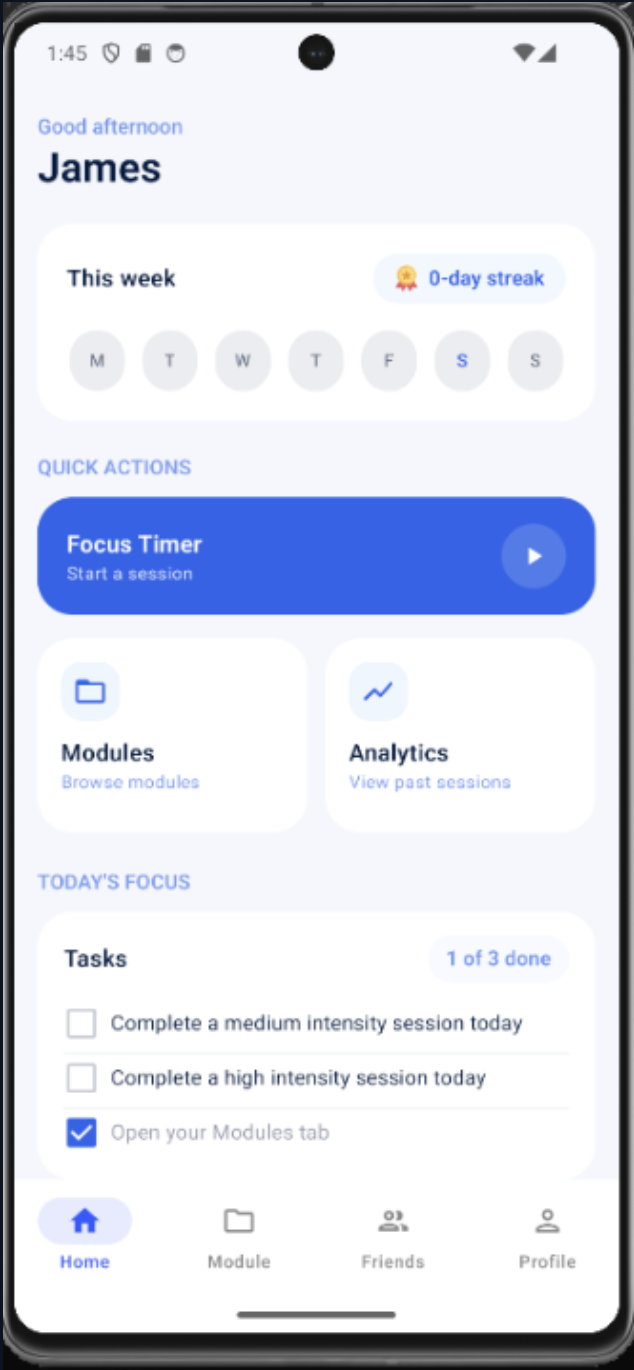
Project Overview
FocusAI is an Android mobile application designed to support structured and efficient studying for tertiary students. The system addresses the fragmented nature of common study workflows by bringing PDF organisation, AI-powered revision support, timed focus sessions, analytics, and lightweight collaboration into a single mobile experience.
Key Highlights
Built an Android study companion that unifies PDF organisation, AI-generated revision artefacts, structured study sessions, analytics, and shared study in one workflow.
Used Kotlin and Jetpack Compose with an MVVM-based layered architecture to separate UI, state management, domain logic, repositories, and cloud services.
Implemented a PDF ingestion and cleaned-text caching pipeline using PDFBox, improving downstream AI artefact generation quality and reducing repeated processing.
Integrated Gemini through Firebase AI to generate structured notes, flashcards, and quizzes from uploaded study materials.
Developed shared study session synchronisation through Firestore-backed real-time state updates between host and guest users.
Implemented focus sessions, inactivity and distraction handling, analytics tracking, streak support, and movement-based break progression using the accelerometer.
Problem
Students often rely on multiple disconnected tools to store PDF materials, generate revision resources, manage focused study sessions, track consistency, and stay accountable with peers. This fragmented workflow creates friction and breaks continuity between content preparation, revision, and actual focused study.
Solution
FocusAI solves this by providing one integrated study-support ecosystem. Users upload and organise module-based PDFs, extract and cache cleaned text, generate persistent notes, flashcards, and quizzes with Gemini, and then use these artefacts inside timer-driven solo or shared study sessions. The system also adds analytics, streak tracking, distraction monitoring, and movement-based breaks to support consistency over time. The report’s architecture diagram on page 8 and workflow diagram on page 9 show this layered design and end-to-end study flow.
Outcome
The project delivered a substantial Android application that integrates AI artefact generation, mobile cloud services, study-session coordination, and analytics into one coherent product. It also demonstrated strong engineering practices through layered architecture, broad feature integration, and meaningful test coverage across unit, UI, and end-to-end style workflows.